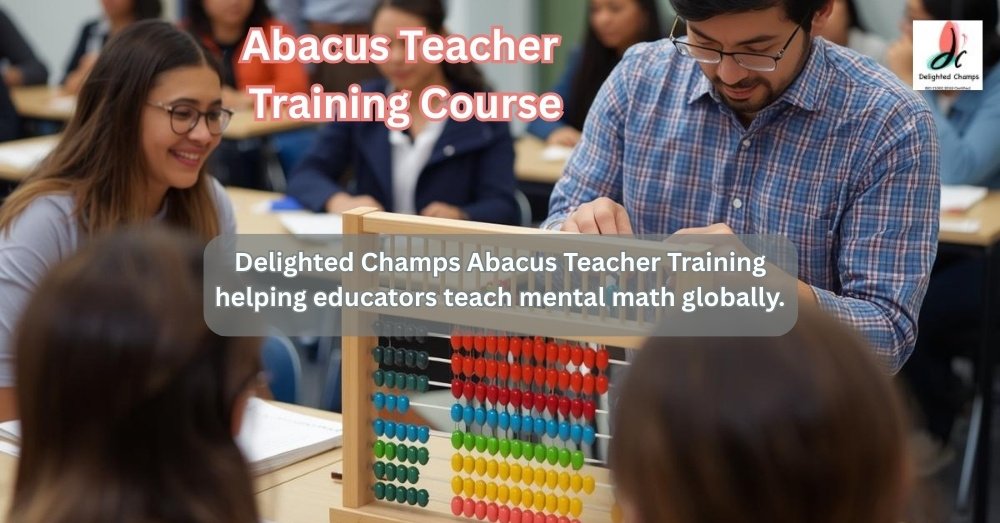
The Rising Global Demand for Abacus Teacher Training: Opportunities and Insights
Nowadays, schools and families both care more about building kids’ thinking skills. Abacus learning shows up as one method—sharpening math sense while boosting focus, recall, and strength in reasoning. This shift pulls teacher interest worldwide, opening paths for those who teach or start programs.
Lately, more places want abacus teachers—especially where schools value learning and brain-boosting math skills. India, China, Japan, and Singapore stand out on this list. Yet, it is spreading beyond that point to cross parts of Europe, the Middle East, and East Asia. Progress is moving quickly. Where things used to seem small and close by, a shift in how children learn math now shows up everywhere.
Abacus Education Gains Popularity
Not just sticks and beads, the abacus shapes thinking. Kids sharpen their inner calculation through it while tackling problems with sharper focus and stronger recall. Some grown-ups look hard for ways to help young minds compute fast, without paper or devices. This means educators who can lead students—whether in person, at learning centers, or online—with reliable techniques must be available.
Some factors contribute to this growing interest:
Fresh thinking shapes how families watch young minds learn today. Growth isn’t just measured in grades—moods matter too. Little by little, awareness shifts toward inner progress alongside schoolwork. What used to be a background concern now takes center stage at home. Focus lands on both thought patterns and test results alike. Abacus classes pop up on their radar as something that might sharpen math skills, along with reasoning ability.
Starting early matters more than most realize. Nations such as China, Japan, and Singapore, as well as India, build strong learning habits right from childhood. Learning the abacus fits neatly into those setups. It sharpens how kids think through math problems inside their heads. Confidence grows not by chance but step by step. Math stops feeling heavy when practice shapes ability.
Finding quick answers in your head? That helps when tackling science or building tech gadgets. Picture a classroom where counting beads leads to stronger number sense. Instead of relying on calculators, kids train their minds through patterns and motion. When lessons click early, grasping engineering ideas later feels less like magic, more like practice. Solving problems without paper might seem small—it quietly shapes how students handle complex tasks down the road.
Thanks to digital tools, abacus lessons have moved beyond school walls. Now, educators connect with learners from different areas through web-based setups. This shift has led more people to seek out qualified tutors. Growth in virtual teaching means abacus teacher training programs are seeing higher interest.
Regional Insights: Where Abacus Teacher Training Thrives
- India
Home to countless learners, India thrives as a hotspot for abacus learning thanks to its passion for skill-building outside regular schoolwork. Because math excellence matters deeply here, families happily support solid training in mental arithmetic. Down south from Mumbai, past Delhi, roads lead toward buzzing Bangalore—where tech sets pace—and sprawling Hyderabad, both feeding fresh spots where data sharpens vision. More teachers arrive today than years back, drawn quietly by chances carved open as curiosity grows.
- China
When kids face tough school pressures in China, many turn to mental math training. Because of this pressure, parents believe working with an abacus sharpens thinking and quickness. Some schools team up with special abacus programs so students can learn it during regular classes.
- Japan
Starting young, kids in Japan often line up for soroban classes after school. Though digital tools flood classrooms, fingers flying across beads still hold strong appeal. Not just about numbers—focus matters most. In cities such as Osaka and Tokyo, these sessions fill fast. Precision shapes minds here, one bead at a time.
- Singapore
Early lessons matter a lot in Singapore’s schools, where reasoning skills get top priority. Because of this mindset, abacus classes draw crowds of families wanting extra challenges for kids. With performance always under scrutiny, trained educators rarely face a shortage of opportunities.

Trained Teachers Are Hard to Find, So Demand Stays High
Fingers sliding across wooden beads, learning clicks into place when structure meets care. Patience shapes each lesson, one small step at a time. Engagement comes through quiet attention, not force. Confidence builds quietly, like roots under soil. Mastery arrives without fanfare, simply because the work was steady.
Here are some reasons for the increasing demand for abacus teacher training:
- Every child deserves the same chance to learn well. Schools look for educators who stick to methods that work. Families expect steady results across classrooms. Teachers using trusted approaches meet those needs without surprise gaps.
- A single teacher often handles many pupils at once, so schools grow without needing more staff right away.
- Teaching works differently now—some choose screens, others prefer classrooms, and a few mix both. Skills adapt wherever learning happens.
Teaching the abacus opens doors worldwide, especially when certification is involved. Beyond regular classes, some find work giving one-on-one lessons. Others run branded learning spots under established names. A growing number reach through online setups. New paths keep appearing as interest spreads across regions.
Delighted Champs and Global Demand
Starting strong, Delighted Champs shapes teachers through hands-on abacus teacher training that clicks where it matters. With lessons unfolding step by step, learning moves beyond numbers into real classroom confidence. From foundational number work to sharp methods for guiding young minds, each module builds quietly but surely. Because results matter more than jargon, instruction stays clear and grounded. Graduates walk away ready, not just trained—prepared without the noise.
It’s Clear—What One Area Needs Isn’t What Another Asks For
Starting each time differently—Japan leans into old-style soroban teaching. India builds sharp number skills through fast-thinking exercises. China mixes quick math drills with hand-based counting methods. Meanwhile, Singapore shapes fluency by linking thought speed to visual tools.
Fun games meet number practice in classrooms across the previously mentioned countries. Learning by doing takes root where schools blend quick thinking with daily lessons. Instead of rote drills, students solve puzzles that build skills quietly. Class time often shifts toward playful methods that stick. Minds work faster when joy joins the process. Outcomes grow through steady, unseen repetition masked as play.
Out there in places like the Middle East, some European regions, and areas across East Asia, learning happens both face-to-face and through digital platforms. Teaching styles shift deliberately, adjusted carefully to match how people live and think locally. Not one-size-fits-all; instead, approaches bend gently toward familiar rhythms of each community. Classroom moments blend with screen-based sessions, depending on what feels right where. Change slips in through back doors, nudged by local conditions instead of top-down rules.
When classrooms evolve, teachers trained through our program move easily across different environments. While some methods stay fixed, this approach flows into new setups without strain. As learning spaces transform, preparation includes adapting without delay. Though changes happen fast, readiness comes from practice with shifting conditions. Since every setting differs slightly, flexibility becomes part of daily skills. Their flexibility catches attention abroad.

Abacus Teachers May Find More Chances Ahead
What keeps happening around the world shows no sign of stopping when it comes to thinking skills and doing sums in your head. Actually, what experts see coming points this way instead:
- Finding its way into additional global classrooms through digital spaces. Growth continues across borders via web-based learning sites.
- Fueled by hands-on science work, kids grow through playful learning moments. Enrichment steps in when curiosity leads to deeper discovery. Learning stretches beyond facts into real doing. Moments of teamwork spark new ways to solve problems together.
- More parents are now open to spending on extra learning options. Some see value in activities outside school hours. Others weigh costs but still choose added support. A shift appears in how families view education beyond classrooms. Willingness grows slowly, yet steadily across communities.
- Teaching the abacus opens steady work paths for those in education. Certified instructors might land roles in city hubs just as easily as virtual setups, guiding learners from different nations without stepping outside their homes.
Conclusion
Nowhere is safe from the surge in abacus teaching demand—parents everywhere push for it, schools notice, and brains grow sharper because of it. India lights up first, then China follows close behind. Teachers who know the craft find doors wide open across cities once quiet on the subject. Even as corners of Europe wake up, the Middle East leans in, and pockets of East Asia spark new need.
Out here, Delighted Champs rides the wave of a growing movement, shaping teacher skills through full-length abacus teacher training built for real classrooms. Because strong teaching spreads, kids across countries begin seeing numbers differently—sharper, faster, clearer. When instructors learn well, their work lasts longer, goes further, builds more, even as the world’s need keeps rising.
A bright future starts with clear thinking. For those who want to teach, shaping young minds might begin here. Schools aiming to deepen lessons could find value in this tool. Parents curious about strong learning options may see promise in abacus training. Choosing it now sets in motion a path toward greater mental agility.